
How to Use Japanese Honorifics: San, Chan, Kun, Sensei, and Senpai
How to Use Japanese Honorifics: San, Chan, Kun, Sensei, and Senpai
In Japanese, people often add an honorific after someone’s name. These honorifics can show politeness, familiarity, age, occupation, or social position.
In this guide, we explain the differences between -san, -chan, -kun, sensei, and senpai, including when to use them and what to avoid.
Quick comparison table
Japanese | Basic meaning | Common use |
-san | Polite and neutral | Most people and everyday situations |
-chan | Friendly or affectionate | Children, close friends, pets, and cute characters |
-kun | Familiar or semi-formal | Boys, male students, younger people, and some workplaces |
Sensei | Teacher or respected professional | Teachers, doctors, artists, politicians, and other experts |
Senpai | Senior member | Someone with more experience in a school, club, or workplace |
These are general guidelines. The appropriate honorific can change depending on the relationship, age, workplace, and situation.
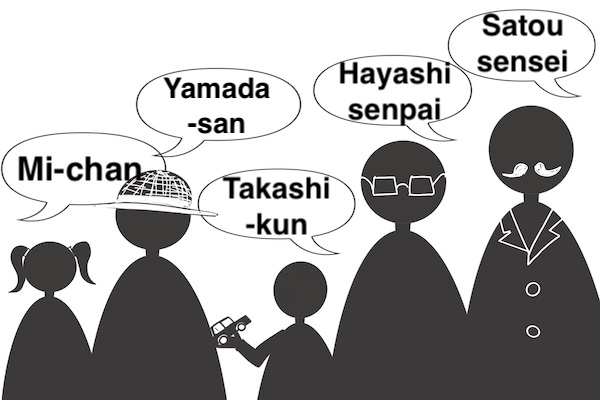
1. What Does “-san” Mean?
-san is the most common and generally safe Japanese honorific. It is used for men and women in many everyday and polite situations.
For example:
Tanaka-san— Mr./Ms. Tanaka
Yuki-san— Yuki, addressed politely
Unlike English titles such as “Mr.” or “Ms.,” is also commonly used with a person’s first name.
When speaking Japanese, avoid adding to your own name. Japanese speakers normally do not use honorifics for themselves.
2. What Does “-chan” Mean?
-chan is a familiar and affectionate name suffix. It is often used for young children, close friends, family members, pets, and cute characters.
It is commonly associated with girls and women, but it can also be used for boys and men in certain situations, especially when the relationship is close.
For example:
Mika-chan
Ken-chan
Neko-chan— kitty / cat, in an affectionate way
-chan is also commonly used in nicknames. A shortened part of a person’s first name may be combined with -chan to create a friendly nickname. For example, someone named Madoka might be called Ma-chan by family members or close friends.
The exact nickname depends on the person and their relationships. Because -chan sounds familiar and affectionate, it is usually best to use a nickname only when the person introduces themselves that way or invites you to use it. When in doubt, -san is usually safer.
3. What Does “-kun” Mean?
-kun is often used for boys, male students, younger men, or people of lower seniority. It is common in schools, workplaces, clubs, and other group settings.
Although is often associated with males, it can also be used for women in some workplaces or formal group environments.
For example:
Taro-kun
Sato-kun
The meaning and tone of depend heavily on the relationship between the speakers. It may sound friendly, professional, or slightly senior depending on the situation.
4. What Does “Sensei” Mean?
literally means “teacher,” but it is also used as a respectful title for certain professionals and experts. These may include doctors, lawyers, politicians, artists, manga creators, and instructors.
For example:
Yamada-sensei— Teacher/Professor Yamada
"Sensei, may I ask a question?"
In Japanese, is usually used with a person’s name or by itself. It is not normally combined with another honorific such as -san:
❌ Yamada-san-sensei
Fun Fact: In Japanese, honorifics can sometimes be combined playfully. For example, a YouTuber whose nickname is Yama-chan might jokingly be called Yama-chan-san. Adding -san shows respect, while keeping -chan preserves the creator’s familiar branding name and adds a fun, friendly tone.
5. What Does “Senpai” Mean?
Senpai refers to someone who joined a school, club, workplace, or organization before you. This person usually has more experience in that group.
A is not necessarily older than you. For example, a younger student can be your if they entered the school before you.
For example:
Tanaka-senpai
"Senpai, could you show me how to do this?"
Senpai describes a relationship within a group. It does not simply mean “an older person.”
6. What Is the Difference Between -san, Sensei, and Senpai?
Expression | What it shows |
-san | General politeness |
Sensei | Professional or educational respect |
Senpai | Seniority or experience within a group |
-san is a general polite honorific. recognizes someone as a teacher or respected professional, while describes someone who has more experience or seniority within a particular group.
7. Why Do Japanese People Sometimes Use Only a First Name?
Japanese speakers sometimes use a person’s name without an honorific when they are close to that person. This is called using the name without a suffix, or yobisute*.
However, using someone’s name without an honorific can sound too direct if you are not close to them.
*Yobisute (呼び捨て) means calling someone by their name without adding an honorific.
8. Common Mistakes to Avoid
Mistake 1: Everyone is called “-chan”
-chan is not a universal friendly version of -san. It can sound too familiar when used with someone you do not know well.
Mistake 2: Using honorifics for yourself
Japanese speakers generally do not use -san, -chan, or -kun when referring to themselves.
Mistake 3: Adding two honorifics together
Do not normally combine honorifics, such as Yamada-san-sensei or Tanaka-san-senpai.
Mistake 4: Assuming “senpai” means older
Senpai refers mainly to experience or length of membership in a group, not simply age.
Mistake 5: Calling a teacher by their first name
In a formal school setting, calling a teacher by their first name without an appropriate title may sound overly casual.
9. Which Japanese Honorific Should You Use?
Situation | |
You are meeting someone for the first time | -san |
You are speaking to a customer or colleague | -san |
You are talking about your teacher | Sensei |
You are talking to a doctor or manga artist | Sensei |
You are speaking to a senior club member | Senpai |
You are talking to a close friend’s young child | -chan |
You are addressing a close male friend or younger male colleague | -kun, depending on the situation |
If you are unsure which honorific to use, is usually the safest choice. As you become closer to someone or learn more about the situation, you can adjust your choice.
10. Frequently Asked Questions
Is “-san” used for both men and women?
Yes. can be used for people of any gender.
Can I use “-chan” for a boy?
Yes. It can be used for boys, especially by family members or close friends.
Is “-kun” only for men?
No. Although it is often used for boys and men, some workplaces and organizations also use it for women.
Is “sensei” only for teachers?
No. It can also be used for doctors, lawyers, artists, politicians, and other respected professionals.
Is a senpai older than me?
Not necessarily. A is someone who joined a group before you and usually has more experience there.
Which honorific should beginners use?
-san is generally the safest option when you are unsure.
Japanese honorifics depend on context, relationships, age, and social position. The explanations in this guide are general guidelines, not strict rules.